

Start with the symptom you can verify
The moment the car quits responding, it is easy to describe the whole key as broken. It helps to say what still works. A driver door might ignore the remote while the passenger door responds. The remote might lock both doors while the car refuses to recognize it for starting. A metal key can work in one cylinder and bind in another. If you have two keys, say which functions fail with each. Bring both when arranging work so a comparison can be made at the car.
If the dashboard shows a message, read the wording or take a photo of it while parked. Tell us if it appeared after any other job on the car, especially an ignition, door, battery or aftermarket accessory change. The vehicle year and model are the starting point. Previous replacement parts can affect what is actually fitted now, and a starter or electrical fault may need a different provider from a key or cylinder problem. You do not have to name the faulty part to give a useful description.
Getting to the right parking level
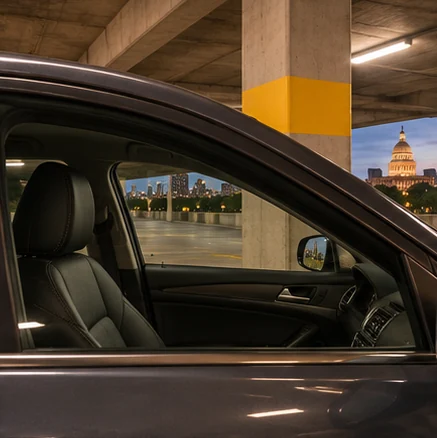
In Downtown Austin, a garage can have an entrance around the corner from the address on your ticket. A West Campus apartment may have an assigned resident ramp, a visitor driveway and a pedestrian lobby. Give the actual vehicle entrance and the level or painted marker closest to you. If you cannot wait safely at the car, agree on a meeting point and explain how you reached the vehicle from there. Check whether any management office or attendant controls access to the deck.
For a car beside a store, give the business name, side of the building and place in the lot. Say if the car is in a loading area, sits against a wall or is behind a gate. If a valet has the only normal access to the vehicle location, ask them where outside work is allowed. Drivers near Austin-Bergstrom should identify the specific garage or lot and coordinate access with the operator if needed. Availability for a particular facility depends on where the car is and how a visitor can reach it.
Report timing, ownership and previous work
If the vehicle must be moved before a lot closes, share that timing without assuming every nearby provider can reach it right away. If roadside assistance or a fleet office is already involved, ask which part of the visit they have authorized. That can keep you from arranging two providers for the same work. A shop may also need to know whether the car starts once you get inside, especially if a tow is a separate possibility.
When you describe a key problem, compare it with the last normal use. A remote that has been unreliable since it got wet and a blade that has slowly become difficult to turn provide different clues. If an unused spare behaves differently, share the difference without guessing why. Bring the spare and any paperwork for work on the ignition or key system that you already have. After the visit, keep the invoice with your vehicle records so an authorized driver can explain what was changed if the issue returns.
When a vehicle is locked and the keys are inside
Tell us if you can see the keys, whether the trunk is the only opening you need and whether another authorized driver can bring a spare. If there is an immediate danger to a person or animal, call emergency services. For an ordinary lockout, keep an ID and proof of your connection to the vehicle available. If the documents are inside, let us know before the visit so we can discuss how your authority can be confirmed.
A rental or fleet car may have separate rules about who can authorize work. Tell us who owns or manages it and whom we can call if the person meeting us cannot approve the work themselves. If roadside assistance is involved, ask which part they have arranged and let us know if another service provider is already on the way. Once the normal key is back in hand, confirm which door was affected and test that it locks and unlocks as expected before leaving the meeting point.
When an ignition or door cylinder feels wrong
A blade that bends or needs more pressure tends to give a warning before it breaks. Let us know if it catches when you insert it, starts moving but stops, or turns without doing what you expect. If it is safe to do so with the vehicle stationary, see whether the spare behaves the same way. The difference between the two keys is more informative than the age of the car alone. Tell us if a broken piece remains inside and leave it in place for inspection.
If the problem happens while starting, explain whether the engine turns at all or the display shows a key message. If the manual door lock works but the remote does not, note that separately. On a push-button vehicle the small emergency blade can be relevant even when you rarely use it. An existing ignition or cylinder might have been changed earlier. A photo of the old key or its label can help us understand the configuration, but keep keys and ownership documents private.
Plan the work, then test what matters
An access visit can stop once you have recovered an existing key and the affected door works. A missing key brings decisions about cutting a blade, supplying a compatible fob and programming the vehicle. Tell us which functions matter for daily use, including basic locking, trunk access or starting. If something was lost with your address or identification, say so before the job. A physical blade and an electronic key credential serve different purposes, so ask which ones any change will affect.
Before you head out, use the working key to test entry or starting as applicable. If a new fob or spare was part of the visit, compare it with an existing one and try the functions you expected to receive. Ask what the invoice covers so you have a record if the symptom returns or another driver needs a replacement later. When you call, give us the symptom, the car and its location. That lets us talk about the proper visit without guessing from the parking address alone.
Common questions
Can you meet a car in a Downtown parking garage?
Call with the deck name, public ramp, level and any height or visitor restrictions. We can discuss whether we can reach the vehicle at that location.
What should I report if a fob opens the door but cannot start the car?
Tell us exactly which buttons work, what the dash says and whether a second key acts the same way.
Can I approve work on a work vehicle?
Check with the fleet owner or manager and have the contact who can authorize work available before the visit.