

One opening, three different jobs
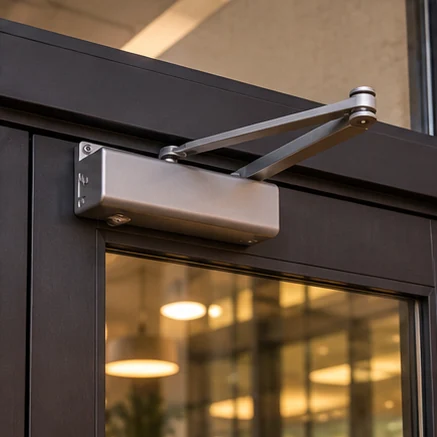
A closer brings a door back toward the frame. A latch holds it there. A lock controls how the latch or bolt can be released. A door can do one or two of those jobs while failing the third. A surface closer may pull a door most of the way shut while the latch rubs. A latching door may still be hard for the key to turn if the alignment places weight against the bolt. If it is safe to watch the ordinary swing, report the first point where movement changes.
Describe the last few inches. Does the door stop, bounce away or pull shut hard enough to slam? Does the latch move easily with the door safely open and become stiff at the frame? Share when it started, such as after a delivery, an impact or a previous closer adjustment. Keep people clear of damaged glass or unstable parts and tell us if the frame itself is affected. An inspection needs to consider the opening as a whole before the part is chosen.
Different storefronts use different hardware
A narrow-stile aluminum storefront often has a slim frame around a large glass pane. The shape limits which latches and trim fit. A heavier wood or hollow metal door can use a different mounting arrangement and can have different exit and rating requirements. A closer on the frame, a latch at waist height and a push bar on the inside are useful landmarks for your description. A full photo from both sides helps identify the opening without disturbing it.
If a keyed cylinder has been replaced before, explain whether staff still use their normal keys or need an updated key plan. For a pair of doors, say which leaf normally moves and what changed on that side. A rated opening, a required exit or a door tied to an access system deserves discussion with the responsible building team. The hardware should be suitable for how that doorway is used and how people are meant to leave. Normal exit should remain available while the work is arranged.
Photograph the opening as people see it
A picture of the full opening, both sides and the top of the frame can help before you decide which part to buy. Include visible trim and bring any existing hardware record. Try normal operation only when safe, and avoid showing credential codes, customer names or keys in the image. If a label is too high to read safely, say so and leave it for the visit. A partial model number rarely tells the whole story on a door that has had changes over several leases.
If the property is occupied, tell us which side the closer or latch is on and who is around to show the symptom. Ask a facilities contact to note any designation for the opening and any rules that apply to it. If you move a visit to a different entrance or dock, update the location with the street that actually reaches it. A clear arrival plan helps separate time spent locating the door from time spent working on it.
Schedule around the storefront and the building
A door along a Downtown block could face a sidewalk while the building uses another entrance for deliveries. Give the storefront name, actual entrance and where an authorized service visitor can sign in. In a shared office property, state whether the affected door is in the tenant space or a common area. Include the suite and facilities point of contact. Ask the property team which parts of the opening can be changed and which trade handles glass, automatic operators or frame damage if needed.
If the door is the only convenient customer route, establish how it will be supervised while it is assessed. If the problem mainly appears during the usual closing shift, share who is there to show it. A door may move differently after a long period of use than it appears when opened once in an empty building. Tell us what is normal, what is new and whether work at adjacent doors could affect it. A quote can then reflect the opening rather than just the name of a component.
Hardware comparisons
Commercial hardware references
These models illustrate the kinds of components that can be found on existing doors. Have the fit and requirements checked for the individual opening.
LCN 4040XP
A heavy-duty surface closer family. The arm, mounting configuration and use of the opening affect selection.
Manufacturer detailsVon Duprin 98/99
An exit device family. Compare the application, trim, door type and appropriate rating before changing it.
Manufacturer detailsAdams Rite 4900
A deadlatch reference for narrow-stile storefronts. Check the profile, backset and other fitted components.
Manufacturer detailsCheck the replacement against the opening
A catalog name is often a family. For a door closer, the body, mounting arm and stop arrangement may vary with how the door opens. For an exit device, trim, width and the existing opening requirements affect the choice. A replacement storefront latch may have a different backset, handing or trim fitting. Compare the existing equipment to the proposal before placing an order, even if the model name looks familiar. A visible label or a building hardware schedule can provide a starting point.
Ask what a proposed repair leaves in place and what its objective is. Restoring a controlled closing swing, making a key turn normally and changing the means of exit are distinct jobs. For a damaged frame or automatic operator, build coordination with the appropriate trade into the plan. If a part has to be ordered, arrange access while you wait and have the person responsible for the door explain the temporary arrangement to the people who use it.
Observe a normal opening and closing cycle
After work, try the opening as people do during a normal shift. Check the way it moves from a couple of ordinary positions and whether the latch catches without extra pressure. Test the approved outside key, handle or reader and the intended means of exit. If the door has a credential reader, ask the system administrator to verify the access behavior that belongs to their system. For a business with several openings, note which door was inspected and where the part details will be recorded.
Give us the street address, the door identity and the exact symptom before deciding which part should be replaced. If the door fails to close or secure right now, lead with that fact. For a repair that can be scheduled, let us know when the opening can be inspected without interfering with people who use it. A successful visit should leave you with an opening you can operate normally and a clear record of the work you approved.
Common questions
What if the storefront door shuts but does not latch?
Tell us what it does at the end of the swing and whether the opening rubs or rebounds. Have the closer, latch and frame considered together.
Does this service include glazing or automatic operators?
Our focus is door hardware and alignment. Let us know if glass, the frame or an automatic operator has been damaged so the correct scope can be discussed.
Who should be there for a managed office door?
Arrange for the tenant or authorized facilities contact to identify the door and approve work.