

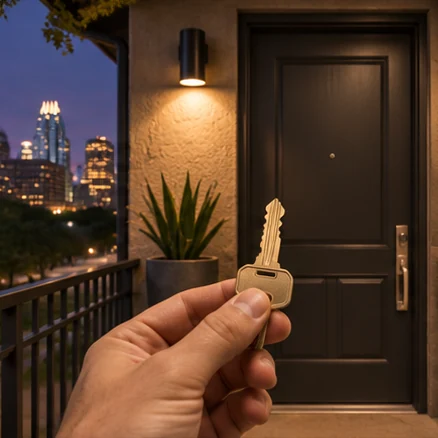
Which opening is holding you up?
A person locked in the hallway outside an apartment has a different problem from a visitor who cannot get past the building entrance. Tell us where you already have access and where you need it. A front door that latched when you stepped out calls for a different inspection from a deadbolt that has been binding for weeks. A broken key, damage near the latch and a missing fob are useful facts to share even when you are unsure how they relate.
A lockout may need immediate help from emergency services if there is smoke, a medical emergency or someone is at risk in a vehicle. Call 911 in those circumstances. For a regular lockout, wait in a safe place and tell us where you are moving if the driveway, loading lane or curb is busy. Save enough phone battery to confirm a meeting point before you leave the exact location. If the key turns up or someone with permission gives you access first, call with the update so we can reassess what you need.
Agree on a meeting point before you move
When several people are involved, name the person at the door and the one who will approve the job. If you are calling for a family member in a Downtown condo, ask them to tell you which access is missing. A front desk can often direct a visitor to the correct lobby, while a resident or building representative can confirm the actual opening. If a manager has already arranged another way in, have them tell you what can be used before anyone travels to the site.
If your phone is low, give a contact number and agree on a spot that both people can find. In the first call, talk through whether the door can be left safely, whether a vehicle is parked somewhere it has to move and where you can meet without standing in the driveway or traffic. Keep a note of the approved work. At the end, check how the door or car locks and whether any part of the original problem remains. For a rental, confirm how the manager wants to hear about the change.
A Downtown address can have several doors
A tower along Congress Avenue may use one street address for a public lobby, a garage and a loading area. Share the building name, cross street and which check-in desk or entrance to use. If you are locked out of a floor or suite, identify that level and have the contact who controls it available. A badge that opens the lobby may leave access to a private office or unit unchanged. Building staff can help identify the person who needs to approve work on a shared door.
At a private house, explain whether to come to a front porch or a side gate and whether someone will meet us before reaching that door. In a rental near the university, check for a property-managed entry or a key policy. A roommate may be able to confirm who lives in the unit, while the owner or manager may be the one who can agree to a hardware change. Say which people can be reached before the visit and which person is already on site.
Keys visible in a car, or keys that are gone
If the keys are on the seat and you can see them, tell us. If the only fob is gone, start with the year, make and model. A visit to regain vehicle access and one to supply or program a key involve different information. If a spare is on its way, let us know how soon it might arrive. For a company, leased or rental vehicle, find out whose approval is required and whether the person who can give it will be available. Keep sensitive ownership information in a private conversation.
In a garage near the Convention Center area, a parking app or map pin may locate the building but leave the correct ramp and level unclear. Give the entrance street, deck name, floor and row. Mention low clearance, a gate or a staffed garage if it affects access. If the car is in a valet area, ask the operator which procedures apply before agreeing to a meeting spot. You can meet somewhere brighter and safer if you tell us how to reconnect with the vehicle from there.
The key is present but will not turn
Describe whether it goes in fully, turns part way or moves without opening the door. If a key broke, tell us whether part of it is visible and whether the door is shut. Avoid forcing a worn key, and leave damaged hardware in place so its condition can be checked. If the same key worked easily yesterday but the door started dragging today, that timeline is useful. Share a recent change to the door, a dropped key or other work on the opening if one occurred.
An exterior opening that already stands open has a different immediate need. For a commercial door that has stopped latching, call from a safe position and say what the opening is used for. Let us know if it is the normal customer door or a required exit. Arrange with the responsible property contact to supervise the opening and keep exit routes clear while the work is discussed. A latch issue, a door that returns too quickly and damage to glass or a frame can have different repair scopes.
What to confirm before approving a visit
Ask about the visit charge, the work it covers and which findings could affect the estimate. A job to restore access may be agreed before work to rekey a lock or repair damaged hardware. Decide who can approve a change in scope if the technician finds a different problem. Bring identification and a way to show you can authorize access. If those documents are in the locked room or vehicle, tell us early and have a leaseholder, manager, fleet contact or other authorized person reachable where possible.
After you regain access, try the lock with the key or credential you plan to use next. If the door still sticks or the old key may be in someone else's hands, ask which concern can be addressed with the work already discussed and which needs a new decision. If the key was only left inside, you may need nothing further once the door works normally. When you call, give the exact opening first so we can help you choose the next practical step.
Common questions
Can you tell me what a lockout costs?
Call with the kind of door or vehicle and explain whether the key is inside, missing or damaged. Ask about the visit charge and what an inspection could change before agreeing to work.
What if I need help at a building with a controlled entrance?
Tell us which door is affected and where you can meet. Have the manager or authorized contact available when the opening belongs to the property.
Does a lost car key require a different visit?
Share the year, make and model and whether another key exists. Replacing and programming a key can involve additional work beyond opening the vehicle.